
My wall is wet and the paint is bubbling. What is this called?
If a wall feels damp, the carpet squishes near the baseboard or a ceiling stain keeps growing, you need water mitigation. That is the trade name for stopping a water loss from getting bigger, and it covers extraction, drying and monitoring.
It is a different job from rebuilding. Mitigation comes first, and the drywall, flooring and paint come after the structure reads dry.
What water mitigation covers in Fountain Valley homes
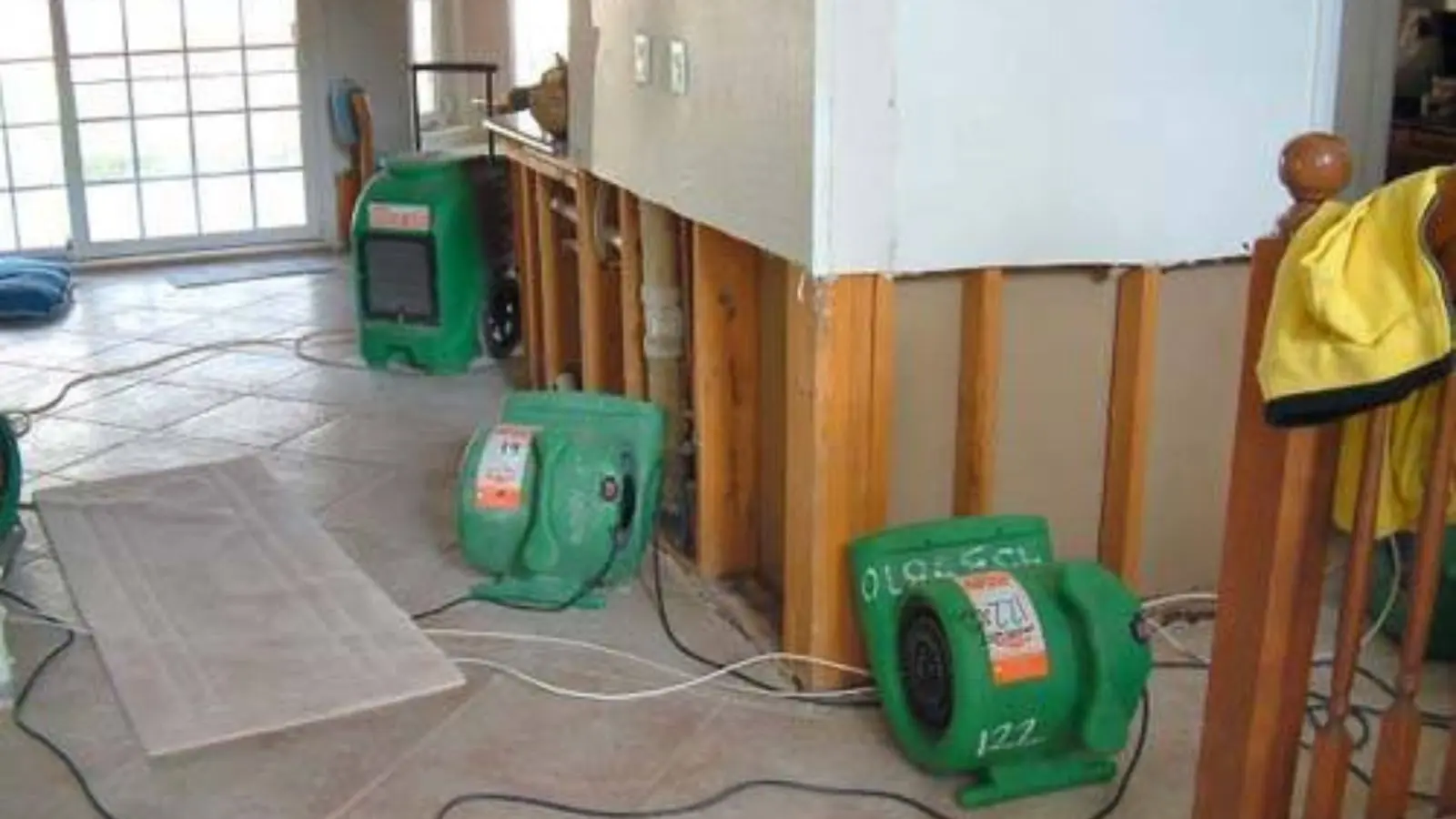
Water mitigation in Fountain Valley starts with a quick look at where the water came from and how far it traveled. Crews find the wet materials with moisture meters and a thermal camera, then decide what can be dried in place and what has to come out.
Most losses we see fall into three groups: a failed supply line or appliance hose, a roof or window leak after rain, and a slow leak that went unnoticed behind a wall. Each one needs a slightly different drying plan, and the plan is explained before any equipment is set.
Homes across the city were built in large tracts starting in the 1960s, so many are now more than 60 years old. Original pipes, water heaters and roof sections that age are common leak points, which is why mitigation crews check the whole room and not only the visible stain.
Is the water still spreading?
Shut off the main valve, then call (714) 515-1308 so drying equipment can be scheduled.
Emergency steps to take while you wait for the crew
Time matters, but your safety matters more. Work through this list in order and stop at any step that does not feel safe.
- Shut off the water at the main valve or the fixture valve if you can reach it dry.
- Turn off power to wet areas only if the panel is in a dry spot. Never touch a panel or outlet while standing in water.
- If water is near electrical panels, outlets or gas appliances, stay out and call the utility or 911 before you call us.
- Lift small furniture and valuables onto foil, blocks or a counter.
- Move rugs and soft items out of the wet zone and open interior doors for airflow.
- Take photos and short video of the damage, the source and any wet belongings for your records.
How a mitigation visit runs
Every job follows the same order so nothing is skipped.
- 1
Assess
Moisture readings and thermal imaging map the wet area wall by wall.
- 2
Stop
The source is shut off or isolated so no new water enters.
- 3
Extract
Pumps and extraction units pull standing water from floors.
- 4
Dry
Air movers and dehumidifiers go in and are placed by the moisture map.
- 5
Monitor
Readings are taken again each visit until materials reach a dry standard.
The drying equipment and what each piece is for
Callers often ask what all the machines are doing. Here is the short version.
| Equipment | What it does | When it is used |
|---|---|---|
| Moisture meter | Reads moisture inside drywall, wood and subfloor | Every visit, before and after drying |
| Thermal camera | Shows cool wet areas behind finished surfaces | Finding hidden water paths |
| Air mover | Pushes air across wet surfaces to speed evaporation | Floors, carpet, lower walls |
| LGR dehumidifier | Pulls moisture out of the air so drying continues | Closed rooms with wet materials |
| Injection drying mats | Forces dry air into wall cavities or under floors | Hardwood, cabinets, wall bays |
| Extraction unit | Removes standing water and wet carpet water | First hour on site |
The right mix depends on the room size and the water category. A single wet bedroom might need two air movers and one dehumidifier, while a flooded kitchen and hallway need far more.
Structural drying: how long wet materials really take
Structural drying is the part of mitigation that happens inside the building: floor decks, wall cavities, baseboards and the framing behind them. The published ANSI/IICRC S500 standard guides how professionals dry water-damaged structures, and you can ask any company whether its crews follow it.
Most drying takes several days, not hours. Three things set the pace: how long the materials stayed wet, how dense they are, and how well the room can be closed off and dehumidified.
Hardwood, plaster and thick insulation dry slowly, while loose carpet and thin drywall dry faster. Crews return daily to read moisture and move equipment, and the job ends when the readings say the structure is dry, not when a calendar day passes.
If you hear a company promise a fixed drying time before it has taken readings, ask how it plans to confirm the result.
What changes the cost of water mitigation
Every loss is different, so we do not quote from a table. The written scope is explained before work starts, and these are the factors that move it.
Water category
Clean supply water, grey water and sewage need different handling and protective steps.
Area affected
More rooms and more wet wall height mean more equipment and more monitoring.
Materials involved
Carpet pad, drywall, hardwood and insulation each dry or fail differently.
Drying days
Longer drying means more equipment days and more visits.
Rebuild scope
Mitigation ends at dry, and any rebuild is scoped as its own job.
Sudden and accidental water damage is often covered by homeowners insurance, while gradual leaks and neglect often are not, and flood damage is usually excluded. Check your policy or ask your insurer, and keep your photos and moisture readings for the claim. Want your real number? Call (714) 515-1308.
Where mitigation fits with the rest of the work
Once the structure is dry, the job moves to water damage cleanup for sanitizing and debris removal, and then to water damage repair for drywall, flooring and paint. If water is still pooling on the floor right now, emergency water removal is the page that explains the extraction side in detail.
Neighbors in Garden Grove and the surrounding towns call the same dispatch line, and the same process applies there.
Frequently Asked Questions
Yes. The dispatch line is open 24 hours a day, every day, including weekends and holidays. Same-day response is offered when a crew is available, and the call-taker will tell you what to do while you wait.
Water often travels inside a wall cavity before it shows on the surface. A slow supply line leak, a window seal failure or a roof leak above can all do this. A moisture meter and thermal camera find the path without opening the wall first.
Most jobs run for several days, and the exact time depends on the materials and how wet they got. Readings are taken at each visit, and equipment is removed only after the structure reaches a dry standard.
Rental is not something we offer. A professional crew also places the equipment by a moisture map, which matters more than the number of machines, so ask your dispatcher what fits your loss.
No. Mitigation stops and dries the damage, and repair rebuilds what was removed. Starting repair before the structure is dry can trap moisture behind new drywall and paint.