
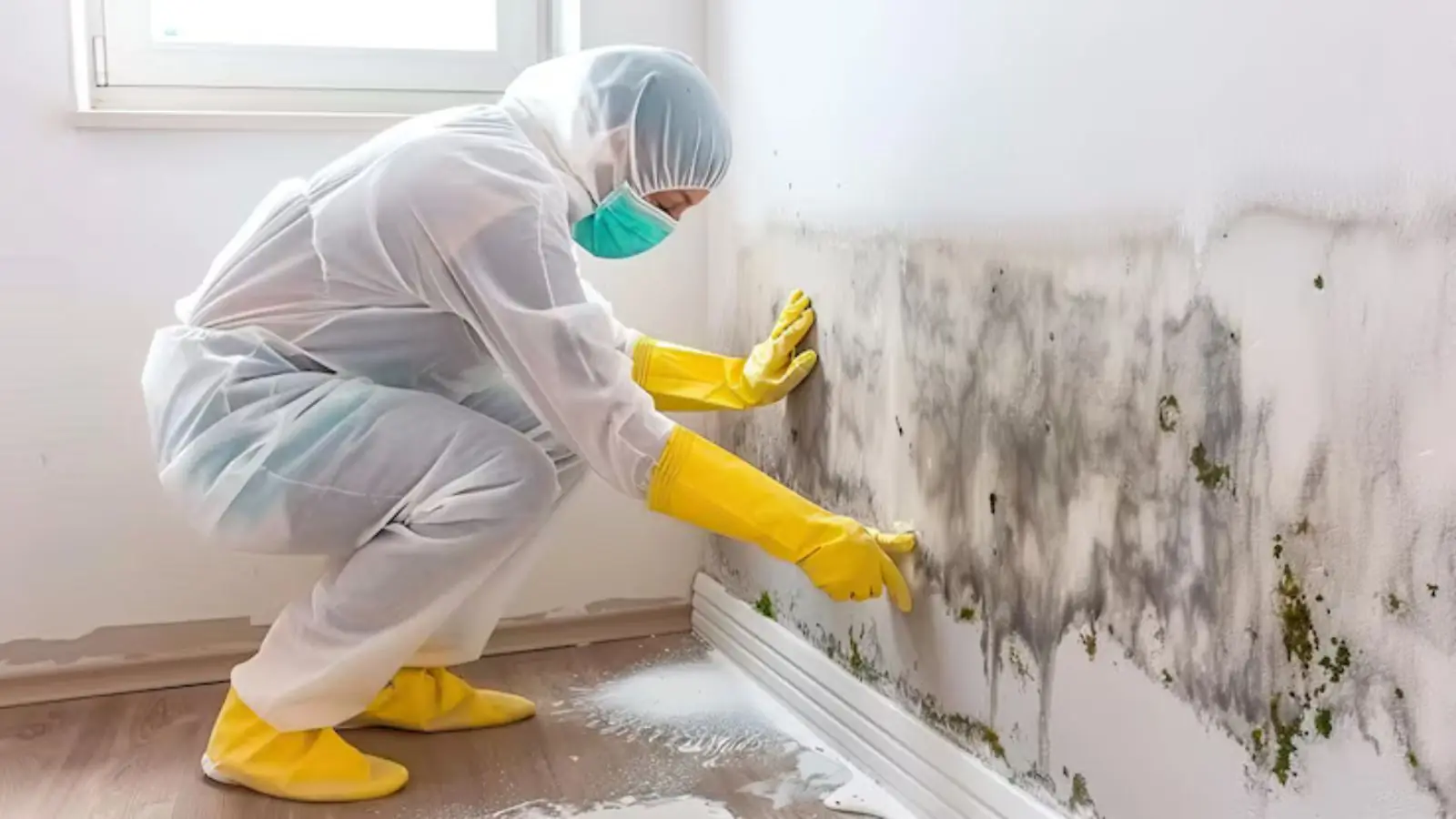
I see dark spots in my closet and it smells musty. Now what?
Dark spots, a musty smell, bubbling paint or a damp corner usually point to moisture that has been present for a while. The trade name for dealing with it is mold remediation, which means finding the moisture source, containing the area and removing or cleaning affected materials.
Start by looking for the water. A leak under a sink, a roof leak, an AC condensate line or a wet closet wall is often behind it.
What mold remediation involves
Mold remediation in Fountain Valley follows a set order. The moisture source is stopped, the area is isolated with plastic sheeting and negative air, affected materials are removed or cleaned, HEPA air scrubbers filter the air and the area is dried and checked.
The ANSI/IICRC S520 standard sets out practices for this work, and you can ask any company whether its crews work to it. Ask too whether the company holds the contractor license your job needs, and check it on the state Contractors State License Board lookup.
Remediation does not include rebuilding, which is handled afterward as water damage repair.
See dark spots or smell something musty?
Call (714) 515-1308 to describe it and schedule an inspection.
Mold testing and inspection
An inspection starts with a visual check and moisture readings, then may include sampling if there is a reason to confirm what is growing. Inspections tell you where the moisture is, how far it reaches and what a removal scope would cover.
Independent clearance testing after the work is a separate step that some buyers, lenders and landlords ask for. Because the person who tests should not be the one who profits from the removal, many homeowners hire an unrelated tester for clearance.
If a home sale or loan is waiting on mold, tell the dispatcher so the scope and paperwork can be planned for it.
Where mold usually shows up after a leak
Closets and exterior walls
Cool wall corners and closets stay damp when furniture blocks airflow.
Under sinks
Slow drips under bathroom and kitchen sinks keep cabinet bases wet.
Bathroom ceilings and tile
Poor ventilation and leaks behind tile feed growth.
Ceilings below roofs and attics
Roof leaks and condensation wet drywall from above.
Carpet edges
Pulling up a corner after a leak often shows growth on the underside.
Around AC lines
A backed-up condensate line wets nearby walls and ceilings.
Mold after water damage
Water damage and mold are linked. When a wet structure is not dried promptly, growth can begin on drywall, wood and carpet pad, which is why prompt water mitigation matters.
If your home had a leak days or weeks ago and nobody dried it properly, ask for an inspection even if you cannot see anything yet. The cheapest time to catch moisture is before it spreads.
A black or dark spot is not automatically a sign of any particular health risk, and we do not diagnose. Questions about health belong with your physician.
Matching the response to the problem
| Situation | Typical response | Notes |
|---|---|---|
| Small surface spot after a fixed leak | Inspection, source confirmed fixed, cleaning of surfaces | Porous materials may still need removal |
| Growth behind tile or inside a wall | Open the wall, contain, remove affected materials | Source repair first |
| Growth across a ceiling or attic deck | Containment, HEPA filtration, removal | Roof or vent source must be fixed |
| After flooding or sewage | Remove porous materials, dry, then assess for growth | Handled with flood restoration |
What shapes the cost of mold remediation
There is no flat rate. The scope and price are explained before work starts, and these factors decide it.
Size of affected area
More square feet means more containment and removal.
Material type
Porous materials like drywall and carpet are removed, while hard surfaces can be cleaned.
Access and containment
Attics and tight spaces take more setup.
Moisture source
The leak must be fixed, and that is often a separate trade.
Testing and rebuild
Testing and reconstruction are scoped on their own.
Insurance may or may not cover mold, depending on the cause of the water and the wording of your policy. Check your policy or ask your insurer. Want your real number? Call (714) 515-1308.
Older Fountain Valley homes and moisture
Large housing tracts went up in Fountain Valley starting in the 1960s, so many homes have plumbing, roofs and window seals that are now over 60 years old. Slow leaks at those points can feed hidden growth.
Our crews also work in Huntington Beach, where coastal moisture is a regular topic for homeowners, and across the other towns on the service area list.
Frequently Asked Questions
Remediation covers the whole process: fixing the moisture source, containing the area, removing growth and drying. Removal is one step within it.
Yes, inspection and sampling are available. For clearance after the work, some homeowners prefer an unrelated tester so the results are independent.
Tell the dispatcher about the deadline so the inspection, scope and clearance steps can be planned. We cannot promise what a lender will accept, so confirm its requirements.
Surface cleaning does not fix the moisture source. If there is a hidden leak or high humidity, growth can return, so inspect for water first.
It depends on the scope. The crew will explain containment and whether the work area affects the rest of the house.