
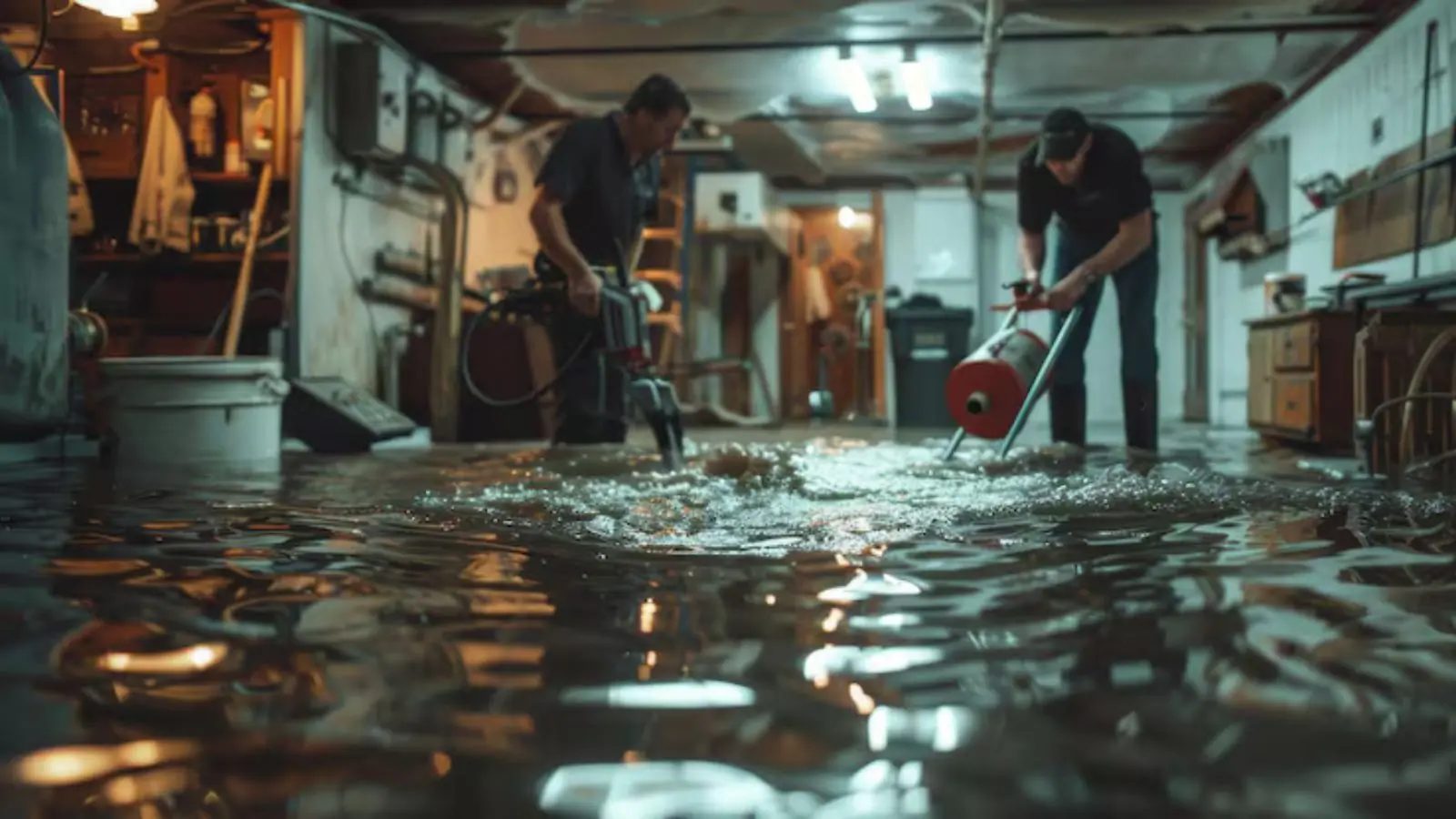
When standing water is an emergency
Emergency water removal in Fountain Valley is the fast extraction of standing water from floors, carpet and low areas before it reaches walls, cabinets and subfloors. A flooded kitchen, a laundry room that overflowed and a bathroom that ran all night all qualify.
Each hour matters. Water moves into drywall by wicking upward, soaks carpet pad within minutes and slips under flooring along seams, so the volume you can see is rarely the whole problem.
The city sits low and flat, at roughly 33 feet above sea level, and a flat slab lets spilled water spread outward through a room and under walls. That is one practical reason crews move quickly to pull water out before it travels.
Safety first: electricity and contaminated water
Some water is dangerous before it is damaging. Read these steps before you wade in.
- If water touches outlets, appliances, the electrical panel or any gas equipment, stay out and call the utility or 911 before calling us.
- Turn off power to the wet area only if you can reach the panel on dry ground. Never stand in water to flip a breaker.
- If the water came from a toilet, sewer drain or outside flooding, treat it as contaminated and keep children and pets away.
- Do not use a household vacuum on standing water.
- Lift valuables, electronics and paper onto counters, tables or blocks.
Standing water in the house?
Do not wait for it to drain. Call (714) 515-1308 and describe the source and the room.
What happens once a crew arrives
- 1
Locate
The source is found and shut off or isolated.
- 2
Extract
Pumps and extraction units remove standing water and wet carpet water.
- 3
Check
Moisture meters and a thermal camera show where the water went.
- 4
Dry
Air movers and dehumidifiers go in. See water mitigation for the drying side.
- 5
Plan
You get a written scope for cleanup and repair before work moves on.
Burst pipe water damage: the first hour
A burst pipe can release hundreds of gallons in the time it takes to find the main valve. Know where yours is before you need it, and shut it off first, before you start moving belongings.
After the valve is closed, open a faucet at the lowest point in the house to drain remaining water from the lines. Then photograph the damage and call the 24/7 line so extraction can start.
Pipes inside walls and ceilings leave water in places you cannot see. Extraction handles the floor, and moisture mapping then follows the water into the wall cavities and the room below.
Fixing the pipe itself is a plumber's job. Restoration crews remove the water and dry the structure so the plumber's repair is not covered up by damp walls.
Where water comes from and what we do first
| Source | First move | What the crew brings |
|---|---|---|
| Supply line or hose | Shut off the fixture valve or main | Extraction unit, air movers, moisture meter |
| Water heater leak | Shut off water and power or gas to the heater | Extraction unit, dehumidifier, thermal camera |
| Roof or window leak | Contain drips, protect belongings | Moisture mapping, drying equipment |
| Slab or crawl space | Shut off the main, note where water rises | Pump, extraction unit, injection drying |
| Sewer or drain backup | Stop using water, stay out | Protective gear and category 3 procedures |
Water in a crawl space
Some homes have a crawl space under a raised floor, and a broken irrigation line or plumbing leak can fill it without anyone seeing. If you hear water running with nothing on, or floors feel soft near the foundation, call.
A crawl space is extracted with pumps and then dried with equipment placed through the access panel. Leaving it wet invites mold on the framing, which is why it should not wait.
What affects the cost of water removal
The scope and price are explained before work starts. These factors drive it.
Depth and area
More standing water and more floor area mean more extraction time.
Water category
Contaminated water adds protective steps and disposal.
Access
Crawl spaces and tight rooms take longer to work.
Materials soaked
Carpet pad, insulation and cabinets decide what stays and goes.
Follow-on work
Drying, cleanup and repair are priced separately.
Sudden and accidental water damage is often covered by homeowners insurance, and gradual leaks often are not. Check your policy and take photos before extraction starts. Want your real number? Call (714) 515-1308.
After the water is out
Extraction only removes what is standing. What the walls and floors absorbed still needs drying, then cleanup and repair.
The published ANSI/IICRC S500 standard for professional water damage restoration groups water into three categories by contamination level, which is why crews ask where the water came from before choosing how to remove it.
Neighbors in Huntington Beach to the south and west call the same dispatch line, so extraction crews cover a wide area.
Frequently Asked Questions
Yes. Dispatch answers all day and all night, including weekends and holidays. Same-day response is offered when a crew is free, and the dispatcher will tell you what to do while you wait.
Treat it as contaminated and stay out. Stop using water in the house and call. Sewage is handled with protective gear and removal of affected porous materials.
Only if the panel is reachable without stepping in water. If water is near outlets or the panel, stay out and call the utility or 911 first.
Yes. Crews use pumps and extraction equipment through the access panel and then dry the framing.
Water keeps soaking into drywall, pad and flooring all night, and more materials may need replacing. The line is open, so calling now costs nothing in time.