
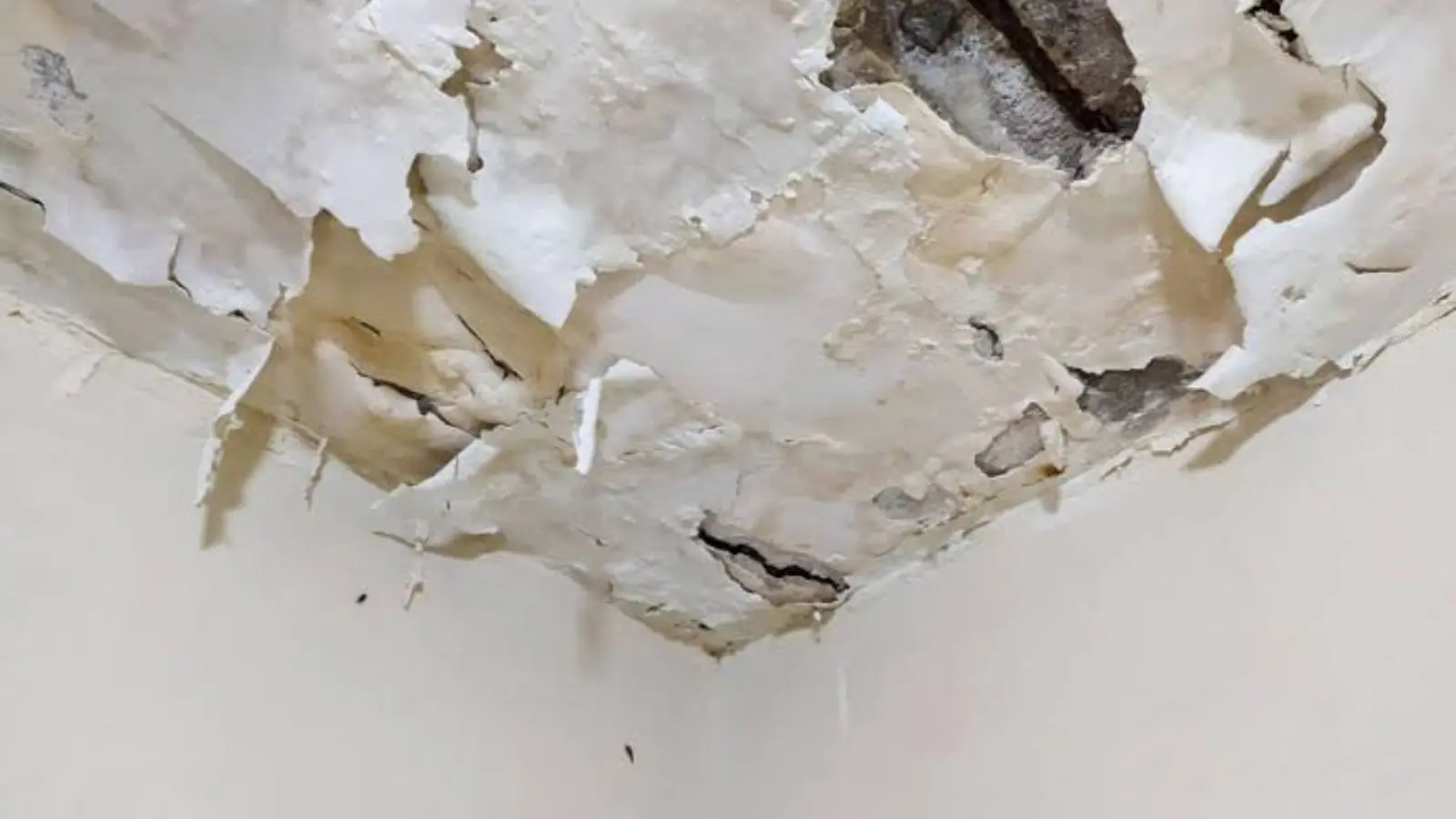
Repair starts when the structure is dry
Water damage repair in Fountain Valley means rebuilding the parts of a home that water ruined. That usually includes drywall, insulation, baseboards, flooring and paint, and sometimes cabinets or subfloor.
The order matters. If the structure is still wet, new materials trap moisture and the damage comes back, so water mitigation always comes first and repair begins only after readings confirm everything is dry.
If you are standing in a wet room right now, skip ahead and call the 24/7 line. If the water stopped days ago and you are looking at stains, soft spots and warped boards, you are in the right place.
Damage that needs repair, not just drying
Some materials cannot be saved no matter how well they are dried. These are the usual signs.
Sagging or stained ceiling
Drywall that bulges or browns has lost its strength and should be cut out.
Soft or crumbling drywall
If a finger leaves a dent, the gypsum has broken down.
Swollen baseboards
Particle board and finger-jointed trim swell and rarely return to shape.
Cupped or buckled flooring
Boards that lift at the edges or rise in the middle point to moisture below.
Loose or hollow tile
Water under the tile weakens the bond and the backer board.
Stained, matted insulation
Wet batts lose their value and often hide further moisture.
Not sure what needs replacing?
Describe the stain, the soft spot or the warped floor and call (714) 515-1308 for an inspection.
Ceiling and wall water damage repair
Ceilings and walls are where most repair calls start. A leak from an upstairs bathroom, a roof, an attic duct or a pipe inside a wall shows up as a stain first, then bubbling paint, then a soft spot or a hole.
The fix begins by finding the source and drying the cavity. Then the damaged drywall is cut back to dry, solid material, any wet insulation is replaced, and new board is hung, taped, textured and primed so the patch blends with the surrounding surface.
Matching the existing texture is part of the scope, and it is worth asking about before you agree to anything. A repair that is square, flat and primed looks finished, while a rushed patch shows through the paint for years.
If a ceiling is sagging, keep people out from underneath it. Trapped water can bring down a section without warning, so treat it as an urgent call.
Hardwood floors: cupping and what comes next
A washer valve that failed overnight, a dishwasher line or a leaking HVAC condensate line can soak a hardwood floor from below. The boards take on water, edges rise, and the floor cups.
Some floors flatten again once they are dried slowly with special mats and equipment. Others have moved too far or stayed wet too long, and the damaged boards are replaced and the area is sanded and refinished.
Because the answer depends on moisture readings in the boards and the subfloor, the decision is made after drying and not before.
How a repair project runs
Each project moves through the same five stages.
- 1
Confirm dry
Moisture readings show the structure is ready for new materials.
- 2
Demolish
Ruined drywall, trim and flooring are removed and hauled away.
- 3
Rebuild
Insulation, drywall and subfloor repairs restore the structure.
- 4
Finish
Texture, prime and paint, then trim and flooring go in.
- 5
Walk through
You review the work and note anything that needs adjusting.
Repair or replace: a quick guide by material
| Material | Often repaired when | Often replaced when |
|---|---|---|
| Drywall | A small area stayed wet briefly and is firm | It is soft, stained through or sagging |
| Insulation | It stayed dry above the wet zone | It is wet, matted or discolored |
| Hardwood | Cupping is mild and flattens as it dries | Boards are buckled, split or black underneath |
| Baseboard | It is solid wood and only wet on the surface | It is swollen composite or paint is lifting |
| Cabinets | Only the toe kick got wet | Boxes are swollen or the base has delaminated |
These are general patterns. A moisture reading and an in-person look settle each case.
What shapes the cost of water damage repair
There is no flat rate for a rebuild, because no two losses match. We explain the scope and price before work starts, and these factors drive it.
Area to rebuild
Square footage of drywall, flooring and paint to replace.
Materials
Standard drywall costs less to replace than custom cabinets or wide-plank hardwood.
Water category
Contaminated water means more materials come out.
Drying already done
Properly dried structures rebuild faster than ones that stayed wet.
Finish level
Texture matching, paint and trim details add labor.
Sudden and accidental water damage is often covered by homeowners insurance, while gradual leaks and neglect often are not. Check your policy or ask your insurer, and keep photos and written scopes for the claim. Want your real number? Call (714) 515-1308.
Permits, older homes and what to ask the city
The City of Fountain Valley Building Division at City Hall on Slater Avenue issues permits for work that repairs a building or its plumbing, electrical, gas or mechanical systems. Whether your specific repair needs one is a question for the division, so ask before work starts and confirm who pulls the permit.
Much of the city was built out in tracts from the 1960s onward, so many homes are over 60 years old. Original plumbing and roofing at that age mean a repair is a good time to look at what failed and whether neighboring pipes or flashing show the same wear.
The same crews work across the border in Costa Mesa, and if mold has started in the damaged area, mold remediation is handled before closing up the wall.
Frequently Asked Questions
Repairs begin once moisture readings in the framing, drywall and subfloor reach a dry standard. That can be a few days after mitigation starts, and the crew confirms it with readings instead of guessing.
It depends on the work. Repairs to a building or to plumbing, electrical, gas or mechanical systems generally need permits, and the Building Division can tell you how your scope applies. Ask the division before work starts.
Texture and paint matching is part of a proper scope. Ask to see how the new section will be finished, because the surface prep decides how well it blends.
Sometimes. Mild cupping often relaxes as the boards dry, while buckled or split boards usually need replacement. Moisture readings after drying decide it.
Call (714) 515-1308 and describe the damage. The scope and price are explained before work starts, and an inspection fills in whatever a phone call cannot.