
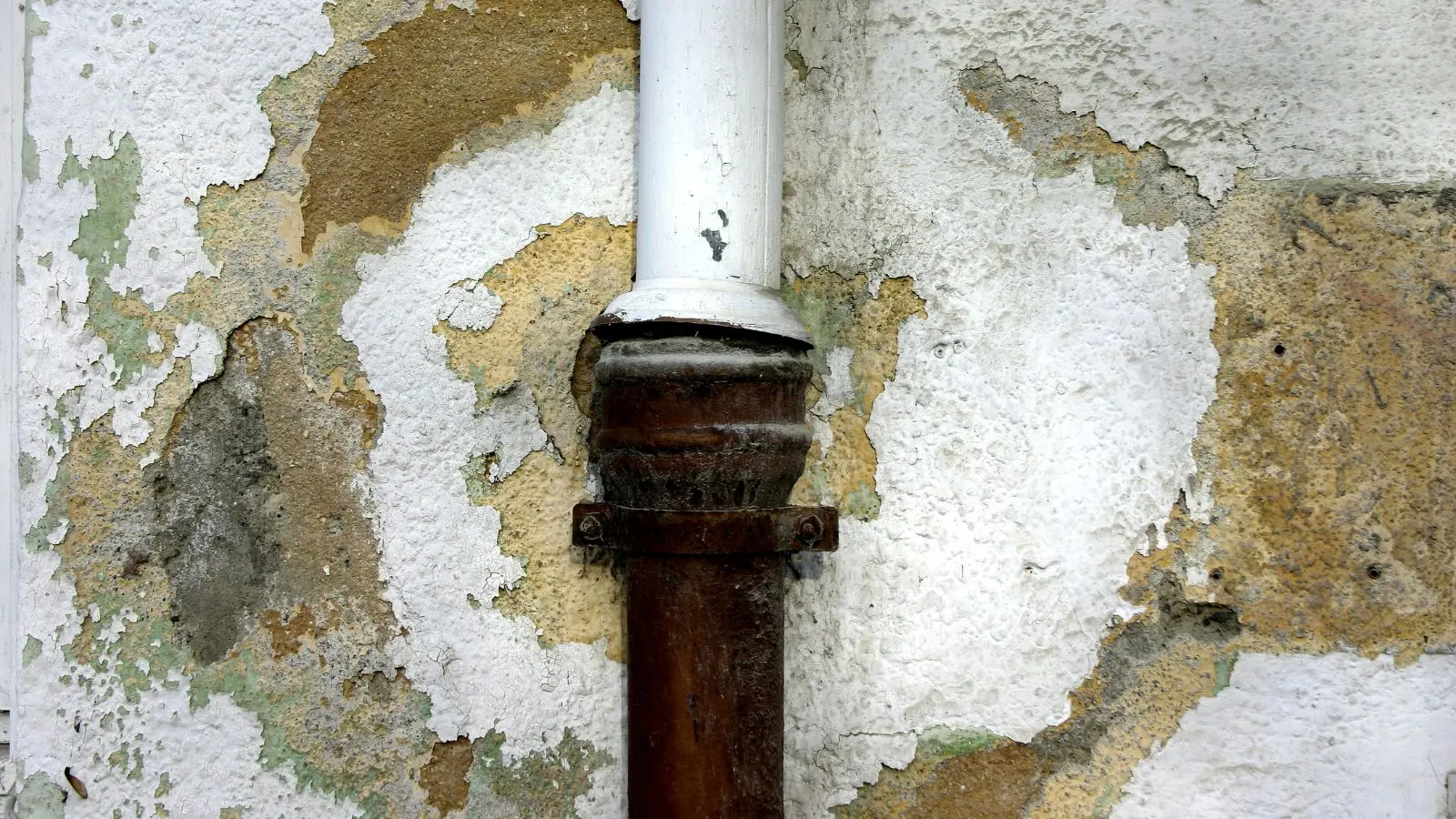
How a wall hides a leak
Behind drywall sit supply lines, drain lines, wiring and insulation. A pinhole in a copper fitting or a failed ice maker line can drip for weeks, and the paint over it may look fine until the board swells.
Water also travels. It follows studs, pipes and the bottom plate, so the wet area can be much larger than the stain.
That is why wall work starts with measurement, not demolition. A technician reads the wall at several heights, compares it with a dry wall in the same home and marks the boundary of the wet area.
Those marks become the plan. They show where drywall must come out, where insulation is wet and where a wall can stay closed and be dried in place, which keeps the repair no larger than it needs to be.
Where wall leaks usually start
Supply lines and fittings
Pressurized water leaks quickly, and even small drips soak insulation and the bottom of the wall.
Ice maker and dishwasher lines
Small tubing runs through cabinets and walls, and failures often go unseen behind appliances.
Windows and siding
Failed flashing or caulk lets rain track into the wall cavity from outside.
Shower and tub walls
Cracked grout or a failing valve seal can push water into the adjoining wall.
Wall feels cool or soft?
Call (714) 515-1308 for a moisture reading.
Mapping, opening and drying
- 1
Map
A moisture meter and thermal camera outline the wet area without cutting.
- 2
Open
Drywall is cut above the highest wet reading, usually a flood cut along a line near the base.
- 3
Remove
Wet insulation, baseboards and soaked board are bagged and taken out.
- 4
Dry
Air movers, dehumidifiers and sometimes wall cavity drying set the framing to a dry reading.
- 5
Verify
Readings are repeated before any new board goes up.
From wet wall to finished wall
| Stage | What happens | What to ask |
|---|---|---|
| Diagnosis | Source is found and fixed, moisture mapped | Is the leak confirmed stopped? |
| Demolition | Wet board and insulation removed | How far above the wet line is the cut? |
| Drying | Equipment set and monitored | What reading means the wall is ready? |
| Rebuild | New insulation, drywall, tape and texture | Does the scope match the written plan? |
| Finish | Primer, paint, baseboards | Are paint and trim included in the plan? |
What happens when the scope grows
Once a wall is open, crews sometimes find more than expected: corroded fittings, damp framing at the bottom plate, or insulation that stayed wet for a long time. A good plan explains this possibility before cutting begins.
If the scope changes, you should hear about it in writing, with what was found, why it matters and what it adds to the work. Photographs of the open wall help you and your insurer see the same thing.
Ask whether any section of framing needs treatment or replacement and how that will be dried. A clear answer here saves surprises later in the rebuild.
Finally, confirm who is responsible for the plumbing repair itself. Restoration crews dry and rebuild, and a licensed plumber repairs the line.
Permits and older walls in Fountain Valley
The City of Fountain Valley Building Division requires permits for work that repairs a building or structure or repairs electrical, gas, mechanical or plumbing systems regulated by the code. Opening a wall often involves plumbing or wiring, so ask the Building Division how the rule applies to your specific repair before work begins.
Many homes in the city date to the 1960s tract boom and are now more than 60 years old. Original copper and galvanized lines and older wiring may need attention once a wall is open, so plan for the possibility that the scope grows.
Sources: City of Fountain Valley Building Division, Fountain Valley, California (encyclopedia entry)
Fast action and careful rebuilds
If a pipe has failed and water is still escaping, shut off the main valve and call our emergency water removal line right away. Fast extraction keeps wetting from reaching insulation and framing.
A water mitigation plan then dries the cavity before anything is replaced. After that, drywall replacement and repainting return the wall to its finished state.
Property owners in Costa Mesa and Westminster contact the same crew when a wall shows a stain after hours.
Before you let anyone cut the wall
Questions worth asking
- How did you confirm the leak source and that it has stopped?
- Where will the cut be made and why?
- What drying readings will you record, and how often?
- Who handles plumbing or electrical permits if needed?
- What does the written scope include for insulation, texture and paint?
Frequently Asked Questions
A moisture meter and thermal camera read through the surface. Cool spots, soft paint or a musty smell are clues, but a reading gives a clear answer.
No. Small, recent wetting may dry in place with drilled holes and cavity drying. Wet insulation or swollen board usually has to come out.
A well-done repair blends. Texture matching and full-wall paint often hide the patch, though the result depends on the finish.
Stop the water, then call a plumber for the repair if you are not licensed to do it. Restoration crews dry and rebuild, while plumbers fix the pipe.
The city's Building Division says permits apply to repairs of structures and of regulated plumbing, electrical, gas and mechanical systems. Because the page does not address water damage specifically, call the Building Division before the work starts.