
Start with the dry-out, not the paint
Most homeowners picture repair as the visible part: new drywall, fresh paint, a clean floor. The order actually starts earlier, with the wet materials that were opened up and dried. If those materials are rebuilt over before they reach a dry reading, the new finish traps moisture against framing and insulation.
That is why a rebuild is best treated as the second half of a job whose first half was drying and water mitigation. The crew that dried the structure should hand over final moisture readings, so the person doing the repair knows the starting point rather than guessing.
A moisture meter reading is only useful when it is compared with a dry reference, such as a similar wall that never got wet. Ask to see both numbers. If nobody can show you any readings, hold off on closing walls.
Repair stages and what each one waits on
Each stage depends on the one before it. The table shows the usual sequence for a ceiling and wall loss in a single-story house.
| Stage | What happens | Waits on |
|---|---|---|
| Final moisture check | Meters and thermal imaging confirm framing and subfloor are dry | Drying equipment removed only after readings pass |
| Insulation and drywall | Wet insulation replaced, new board hung, taped and floated | Dry framing and a fixed leak source |
| Prime and paint | Stain-blocking primer, then finish coats | Joint compound fully cured |
| Baseboards and trim | Reinstalled, caulked and touched up | Painted walls and a dry floor edge |
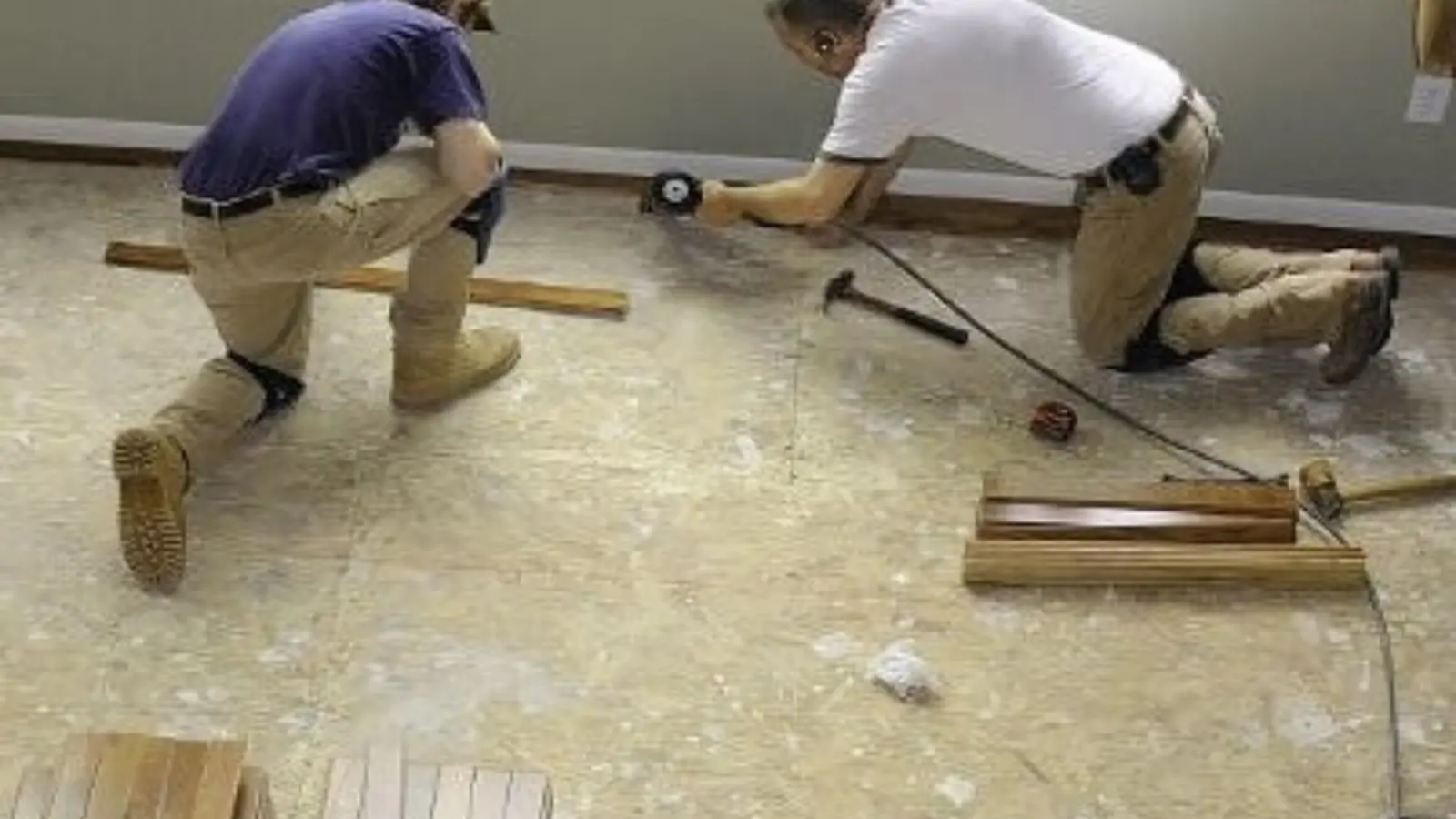
| Flooring | Carpet, pad, laminate or tile laid last | Dry subfloor and finished walls |
Order varies with the materials involved. Cabinets and built-ins add their own steps.
Not sure the wall is dry?
Call (714) 515-1308 and ask how moisture readings are taken before repairs begin.
How the rebuild usually unfolds
- 1
Confirm dry
Written moisture readings and the leak source fixed.
- 2
Open and replace
Wet insulation and board come out, new material goes in.
- 3
Finish surfaces
Mud, sand, prime and paint in thin, cured coats.
- 4
Trim and fixtures
Baseboards, outlets and cover plates go back on.
- 5
Floor last
Flooring goes in after the dust-making work is done.
Scope papers worth having before anyone swings a hammer
A written scope turns a vague promise into a checkable plan. It should name the rooms, the materials being removed, the materials replacing them, and who is responsible for each step.
If an insurance claim is involved, the same document helps your adjuster compare what was damaged with what is being rebuilt. Keep it alongside photos taken before and after demolition.
Matching finishes deserves its own line. Paint sheen, texture and trim profiles rarely match on the first try, and agreeing on how far the painting extends avoids an argument at the end.
What to ask for in writing
Before repairs start
- Final moisture readings with the reference readings used
- A scope listing rooms, materials and replacement items
- Who handles permits, if any are required
- How matching paint and flooring will be handled
- The sequence and expected number of working days
- What happens if hidden damage turns up behind a wall
What local homeowners should know in Fountain Valley
Much of Fountain Valley was built out in the 1960s, when farmland gave way to large housing tracts. A house from that era is now more than 60 years old, so original drywall, wall insulation and trim often come off in sections rather than whole, and the plumbing and roofing behind them may be well past their expected life. Plan for the possibility that opening one wall reveals a second problem.
Repair work on a building or on plumbing, gas, electrical or mechanical systems regulated by the code generally needs a permit from the City of Fountain Valley Building Division. The city's page does not spell out how that applies to water damage repairs, so call the division before the work starts and ask whether yours needs one.
Who does what on a larger job
Smaller losses often fit under one contractor. Larger ones split into drying, demolition, rebuild and sometimes a plumber, and the handoff points are where mistakes creep in.
If you are comparing options, our water damage repair work covers the rebuild side, and the same team can coordinate with whoever dried the structure. Homeowners in Garden Grove and Westminster ask the same question we hear in Fountain Valley: who signs off that the structure is ready to close up?
Whoever you hire, ask them to explain the answer in plain words and put it on paper.
Frequently Asked Questions
Repairs can begin once moisture readings on framing, subfloor and any remaining materials match your dry reference. The calendar matters less than the numbers.
Painting over a stain before the surface is dry and the source is fixed usually fails. The stain bleeds back through, and the paint can bubble or peel.
Exact matches are difficult because paint ages. Agree in writing how far new paint extends, often to a corner or full wall, so the repair does not look like a patch.
The City of Fountain Valley Building Division makes that call. Phone the division with a short description of the work, and ask before demolition rather than after.
Not always. Some jobs stay with one team, others pass between drying and rebuild contractors, which is why written readings and a written scope are worth requesting.