
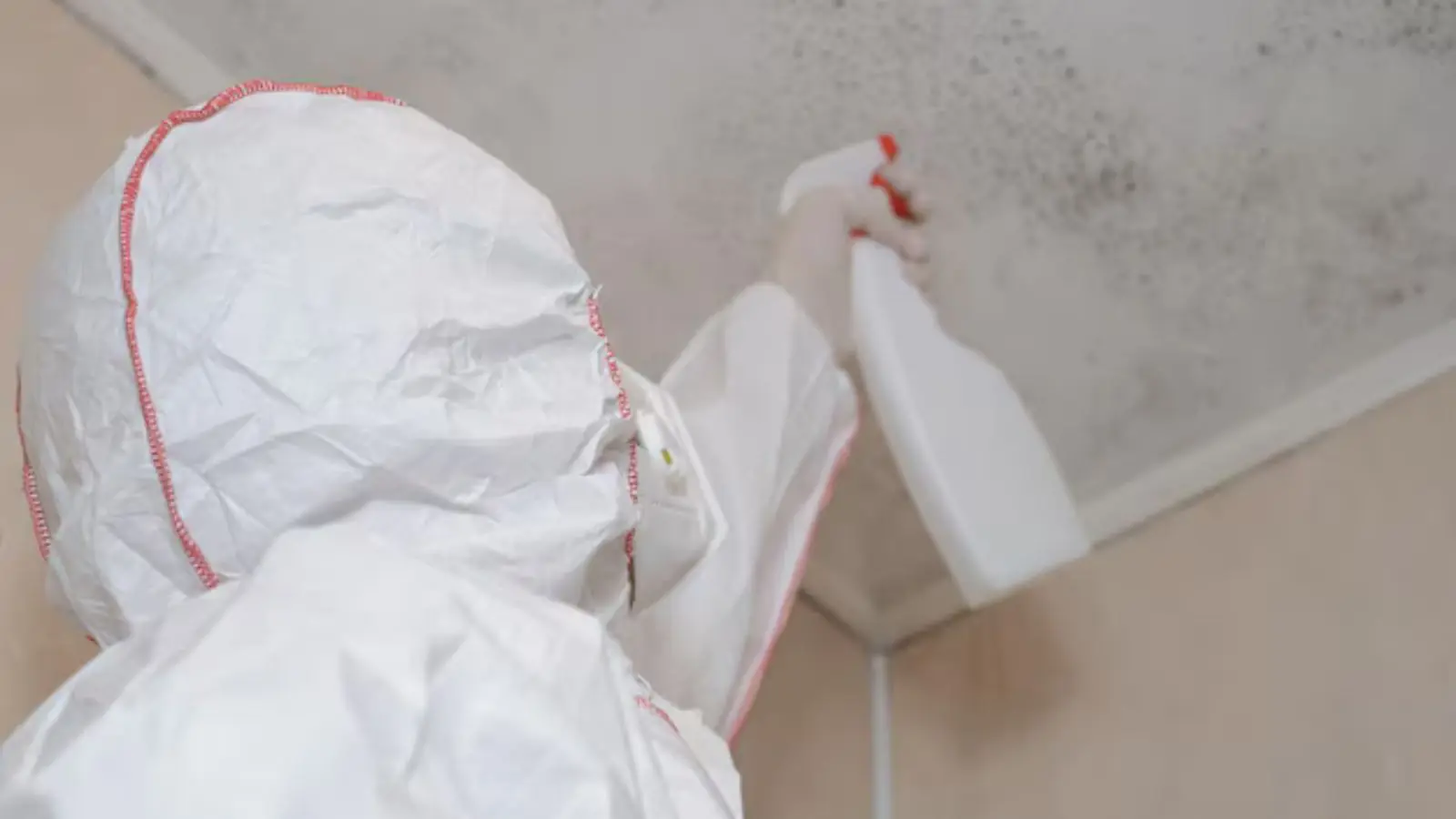
Start above the ceiling, not on it
Mold needs moisture, and a ceiling stays wet only when water keeps arriving from somewhere. A roof leak, a bathroom exhaust duct that dumps warm air into the attic, an upstairs supply line or an air conditioner drain can all do it.
Wiping the surface without finding that source is like mopping a floor under a dripping pipe. The stain may fade for a while and then return along the same outline.
So the real order of work is: stop the water, dry the materials, remove what mold has colonized, then repair and repaint.
What not to do
Common mistakes on a moldy ceiling
- Do not dry scrub or sand the area, because that spreads fine particles through the room
- Do not soak porous drywall in bleach, since it will not reach growth inside the board
- Do not spray a product and walk away without fixing the moisture source
- Do not run a fan that blows across the spot into other rooms
- Do not stand under a sagging or bulging ceiling section
- Do not paint over the stain and call the job finished
Want eyes on the stain?
Call (714) 515-1308 to schedule an assessment.
How containment and removal work
Professional work follows the published practice in ANSI/IICRC S520, the standard for mold remediation. You can ask any company whether its crews work to it.
- 1
Find the water
A moisture meter and thermal camera locate the wet area above and around the stain.
- 2
Contain
Plastic sheeting and negative air keep disturbed particles inside the work zone.
- 3
Remove
Affected drywall and insulation are cut out and bagged, not scrubbed in place.
- 4
Clean and dry
HEPA vacuuming, damp wiping and drying equipment prepare the framing for new board.
- 5
Rebuild
New drywall, texture and paint go in only after the area reads dry.
Cleaning it yourself or calling a contractor
Small, surface-level spots on a sealed, hard surface are different from stained drywall. This comparison helps decide.
| Situation | Reasonable DIY step | Better with a contractor |
|---|---|---|
| Small spot on a hard, sealed surface | Damp wipe with detergent after the source is fixed | If it keeps coming back |
| Stain on a textured drywall ceiling | Document it and stop the leak | Drywall is porous, removal is usually the safer path |
| Bulging, sagging or soft ceiling | Keep people out of the room | Always, and treat it as urgent |
| Spots spreading across several rooms | Photograph and note dates | Assessment and containment plan |
| Home sale, loan or landlord deadline | Gather documents | Written scope and clearance testing |
Why the stain tends to come back
Mold spores are always present in indoor air, and they only need a damp, organic surface to take hold. Drywall paper and ceiling texture qualify, so a ceiling that stays slightly damp becomes a steady food source.
A repeat stain usually means one of three things: the leak was never fully stopped, the material was never fully dried, or the affected board was cleaned in place rather than removed. Ask which of those applies before you pay for any repair.
Keep a simple log with dates and photos. If the stain grows after a rainy week or after someone showers upstairs, that pattern points straight at the source.
Roof leaks and aging ceilings around Fountain Valley
Orange County Public Works identifies the Santa Ana River as the county's primary flood threat and notes that storm drains and channels in some areas lack capacity for a 100-year flow. Flooding is a different problem from a roof leak, but the same storms test shingles, flashing and attic vents.
Many Fountain Valley homes date to the 1960s tract boom, so roof layers and attic ventilation are often decades old. After a heavy storm, check the ceilings in the rooms below the roof edge, because a stain there tells you the roof needs attention before mold has time to settle in.
Sources: OC Public Works flood information, Fountain Valley, California (encyclopedia entry)
When a contractor is the safer route
If the stain sits on drywall, if you smell mustiness without seeing the source, or if the area is larger than a dinner plate, bring in a crew. Our mold remediation service begins with an assessment and a plan for containment before anything is opened.
Once the mold is out, the damaged ceiling still needs rebuilding. That is where water damage repair work comes in: new drywall, texture and paint after the framing is dry.
The same approach applies across the area. Homeowners in Westminster and Costa Mesa call the same dispatch line when a ceiling stain shows up.
A note on health questions
This guide covers building materials only. Questions about how mold affects a particular person belong to a physician.
Frequently Asked Questions
Dark spots can be mold, soot, dirt or old water staining. Testing or a trained assessment can tell them apart, and the moisture source matters more than the color.
Bleach can lighten a surface but does not reach growth inside porous drywall. When the board is stained or soft, removal and replacement are the more reliable route.
Cutting a wet, moldy ceiling releases material into the room and can expose wiring above. Leave it to a crew that can contain the work and check for electrical hazards.
A moisture meter reading compared with a dry reference material in the same home shows when framing and insulation are ready. Painting before then risks a repeat.
It is worth a look, since many homes in the city date to the 1960s tract boom and roofs and vents have aged. Check ceilings below the roof edge and attic corners for stains or a musty smell.