
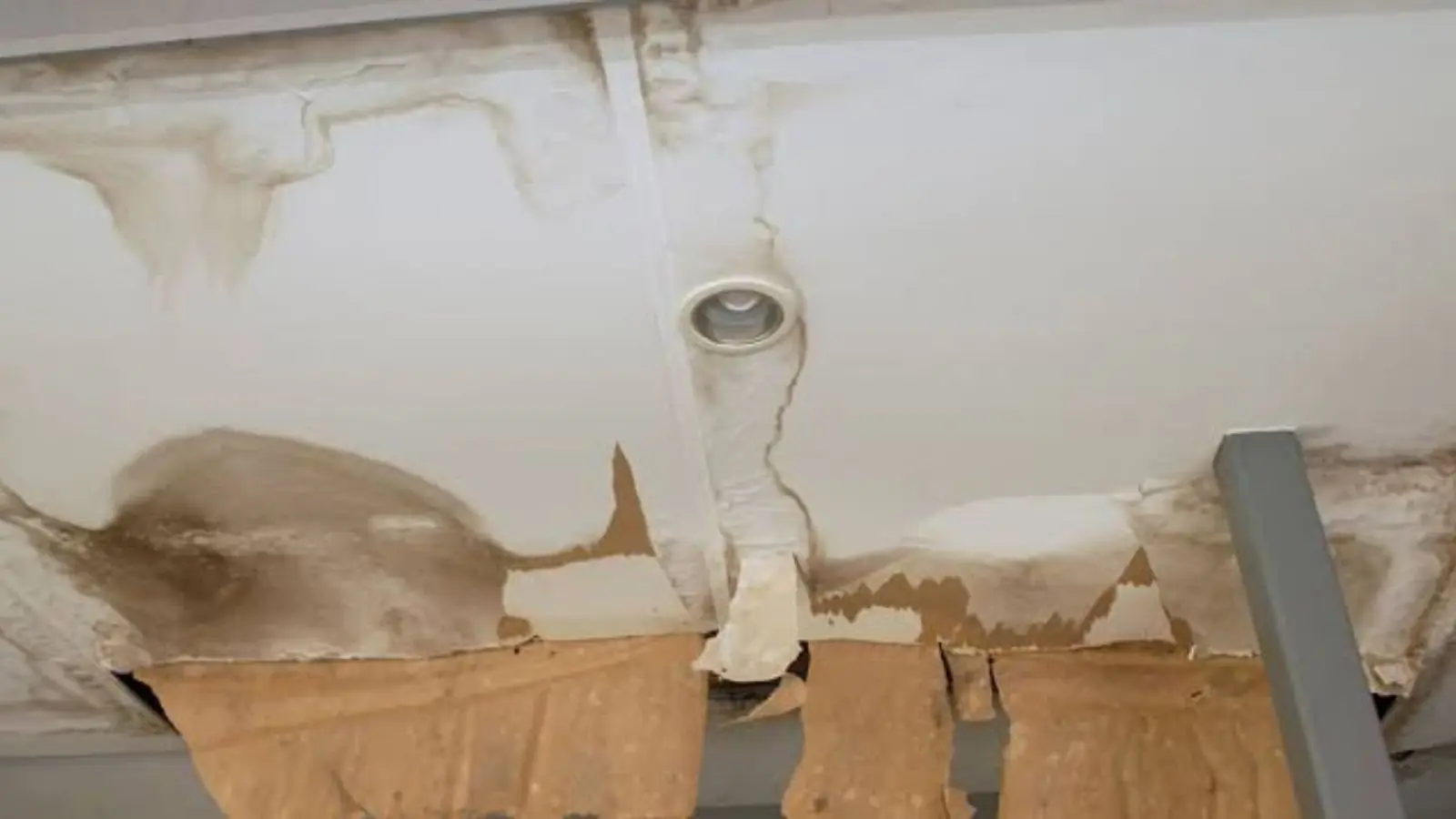
Stain, Bubble or Sag: Three Different Situations
The shape of the damage tells you how urgent it is. A flat ring and a swollen bulge call for very different responses.
A dry brown ring
Often an older leak that may have stopped. The source still needs finding, because rings usually grow back after the next burst of water.
A damp, spreading stain
An active leak. Each hour adds water to the drywall and the insulation above it.
A bubble or bulge
Water is pooled behind the paper face. The weight can be heavy, and the drywall can drop without warning.
A sag or cracked seam
The gypsum has lost strength. Plan on removal rather than patching.
Safety Before Anything Else
Water above a ceiling can reach light fixtures and wiring. These steps come first, in this order.
If the ceiling is bulging or dripping
- Move people, pets and furniture out from under the bulge
- Do not stand beneath it and do not poke it open
- Turn off the breaker for that area only if you can reach the panel while standing on dry floor
- Call the utility or 911 for any smell of gas or visible sparking before you call us
- Shut off the main water valve if a pipe is the suspect
- Place buckets under active drips and photograph everything
Ceiling Dripping Right Now?
Call (714) 515-1308 and tell the dispatcher what is above the damage.
Where the Water Usually Comes From
An upstairs bathroom is the classic source: a failed supply line, a shower pan, a wax ring or a tub overflow. Roof leaks come next, and they travel along rafters before they show up, so the stain may sit several feet from the actual hole.
The air conditioner is a quieter culprit. A clogged condensate line or a cracked drain pan in the attic can drip for weeks, and homeowners often miss it until the drywall softens. Plumbing vent flashings, kitchen line breaks and a leaking water heater pan round out the usual list.
If water is still arriving, [[emergency water removal]] comes before any repair, because the goal is to get standing water and wet insulation out of the cavity. Crews use extraction units and then moisture meters to confirm what is still wet.
Storms and Home Age in Fountain Valley
Orange County Public Works identifies the Santa Ana River as the county's primary flood threat, and says some areas outside the river's 100-year zone can still flood when storm drains and channels lack the capacity for a 100-year flow. Rain can also come in from above, so a ceiling stain that appears after a storm deserves a roof check along with a plumbing check.
Large housing tracts went up in the 1960s, which makes many Fountain Valley roofs, vents and supply lines more than 60 years old if they are original. Ask a roofer and a plumber what has been replaced at your address, because original components are a likely place for a slow leak to start.
Sources: OC Public Works flood information, Fountain Valley history
From Wet Ceiling to Finished Repair
Repair only works after the structure is dry. The order below keeps the job from repeating itself.
- 1
Stop the source
Shut off the supply, patch the roof temporarily or fix the drain line.
- 2
Open and extract
Remove sagging drywall and wet insulation, then extract standing water.
- 3
Dry and verify
Air movers and dehumidifiers run until meter readings match dry reference materials.
- 4
Rebuild
New drywall, texture, primer and paint. See the steps on our [[water damage repair]] page.
Why Painting Over a Stain Fails
Stain-blocking primer hides a ring, but it does not dry the cavity above it. Wet insulation stays wet, and drywall paper that stays damp is where mold takes hold.
Crews dispatched from Fountain Valley handle these calls in [[Garden Grove]] and [[Costa Mesa]] as well, and the sequence is the same: find the water, remove what cannot dry, then repair.
Texture matching is the last detail. Knockdown, orange peel and popcorn ceilings each need a different finish, and a patch that skips the right texture shows every time the light hits it. Ask the crew which finish they plan to match before the drywall goes up.
Keep the removed material until your insurer has seen it or photographed it. A bag of wet insulation and a piece of stained drywall document the damage better than a phone picture alone.
Frequently Asked Questions
It is risky. Water can be heavier than it looks, and wiring or fixtures may sit above the spot. Keep clear and call so a crew can release it in a controlled way.
A small, dry stain may stop changing, but a damp or sagging section usually will not dry because insulation and the drywall paper hold water. Check the source before deciding the damage is old.
Timing helps. Stains that show up only after rain point to the roof, and stains that appear after showers or laundry point to plumbing. A moisture meter and a plumbing pressure check settle it.
Sudden and accidental water damage is often covered, while slow leaks and neglect often are not. Read your policy and ask your insurer, and keep photos and receipts.
Age raises the odds that original roofing, vents and supply lines are worn. Many tracts date to the 1960s, so ask what has been replaced and have a roofer look at flashings after heavy rain.